01
Built for another problem
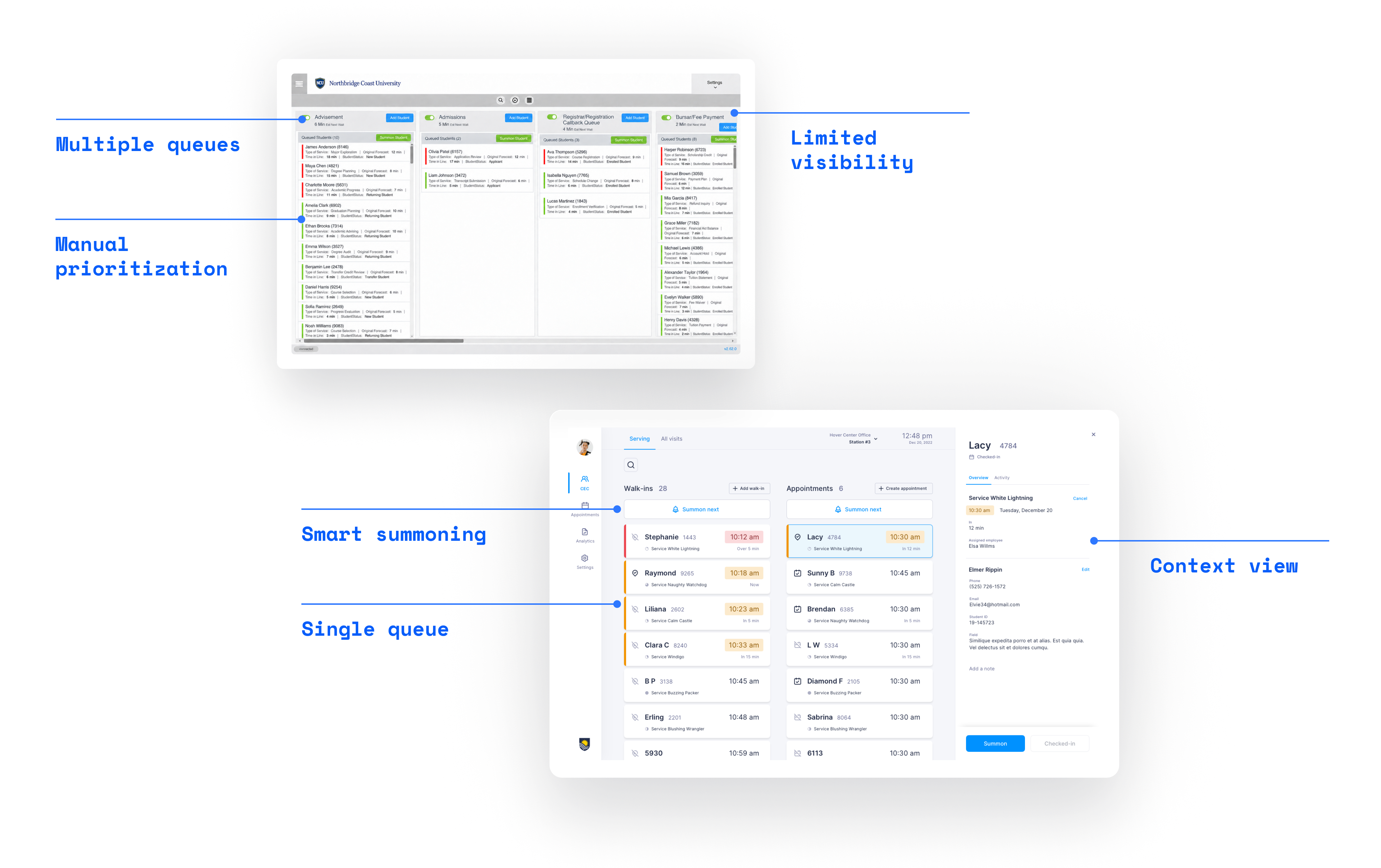
Generic components did not reflect queues, appointments or service states.
QLess / Pegasus
A domain-specific design system created to make real-time service operations clearer, more consistent and easier to extend across product surfaces.
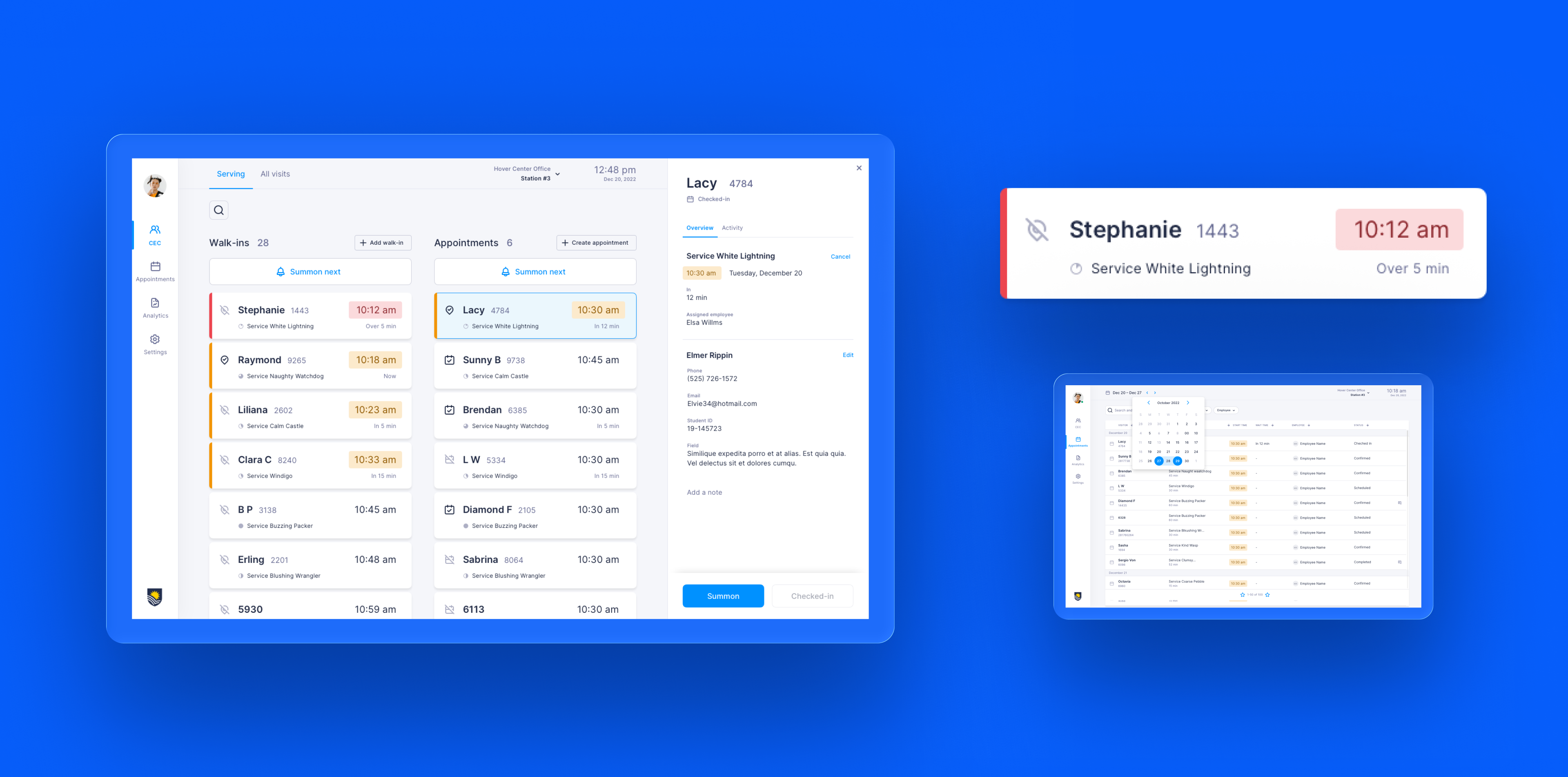
Challenge
It had been created for an admin portal without contemplating the product as a whole. Generic components, missing rules and inconsistent states made user-facing screens difficult to design and maintain.
The issue was not a lack of components. It was a lack of a system that understood the product.
01
Generic components did not reflect queues, appointments or service states.
02
There were no shared tokens or documented rules for color, spacing, radius, elevation or type scale.
03
Screens recombined components differently, states were incomplete and accessibility was inconsistent.
04
Operators needed to distinguish what was on time, approaching service, ready to act on or already overdue.
Foundations
Material Design 3 was used as a foundation for familiar patterns, interaction behavior and state structures. Pegasus expanded that foundation with a more contemporary visual expression and a domain-specific operational language.
Use established patterns where users and developers already understand the behavior.
Turn generic roles into a language for queues, appointments, readiness and time urgency.
Develop a current visual system through typography, color, shape, spacing and composition.
Labels, iconography, placement and actions make the time state understandable at a glance.
Architecture
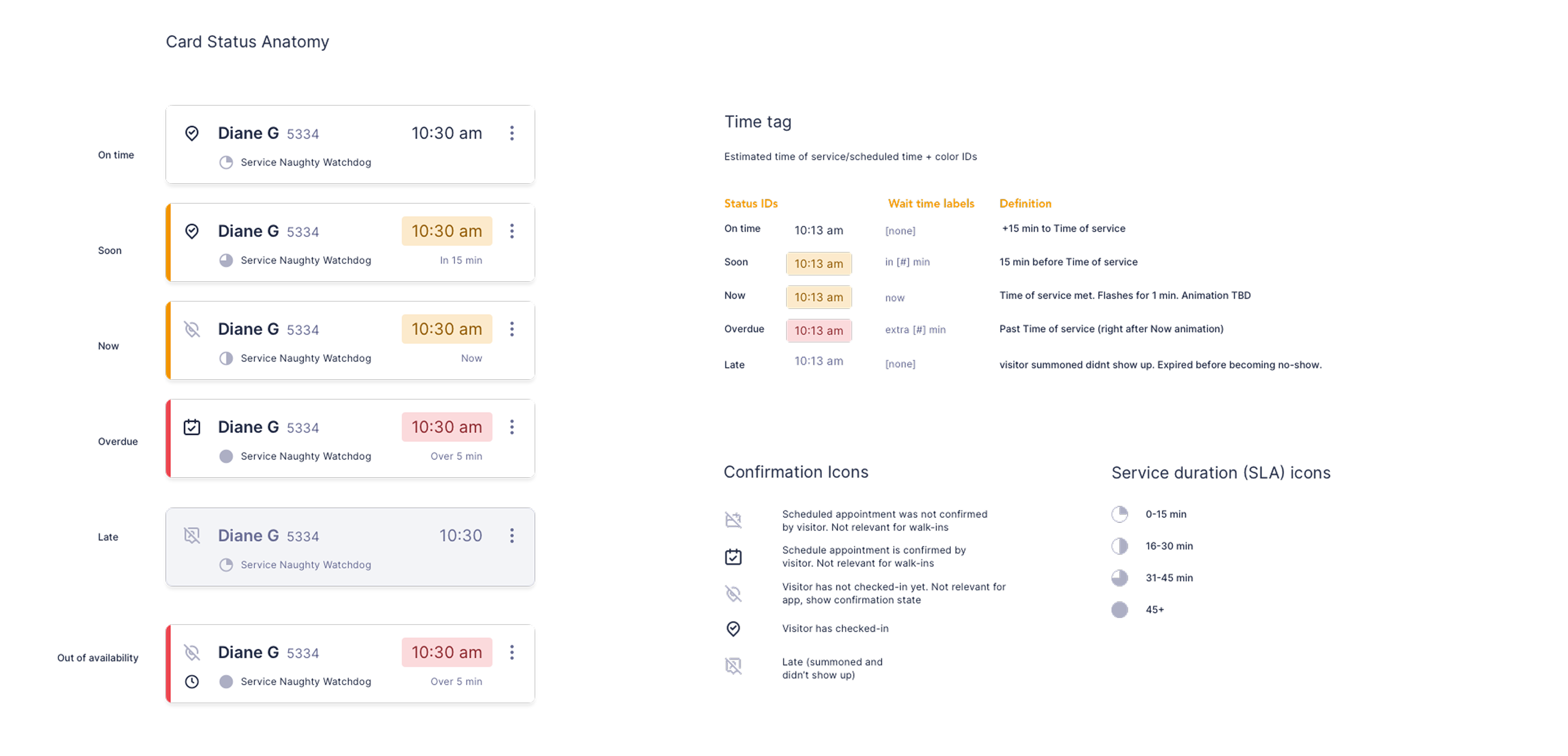
The system translates feedback roles into a shared time reference that travels across components and product patterns without losing its operational meaning.
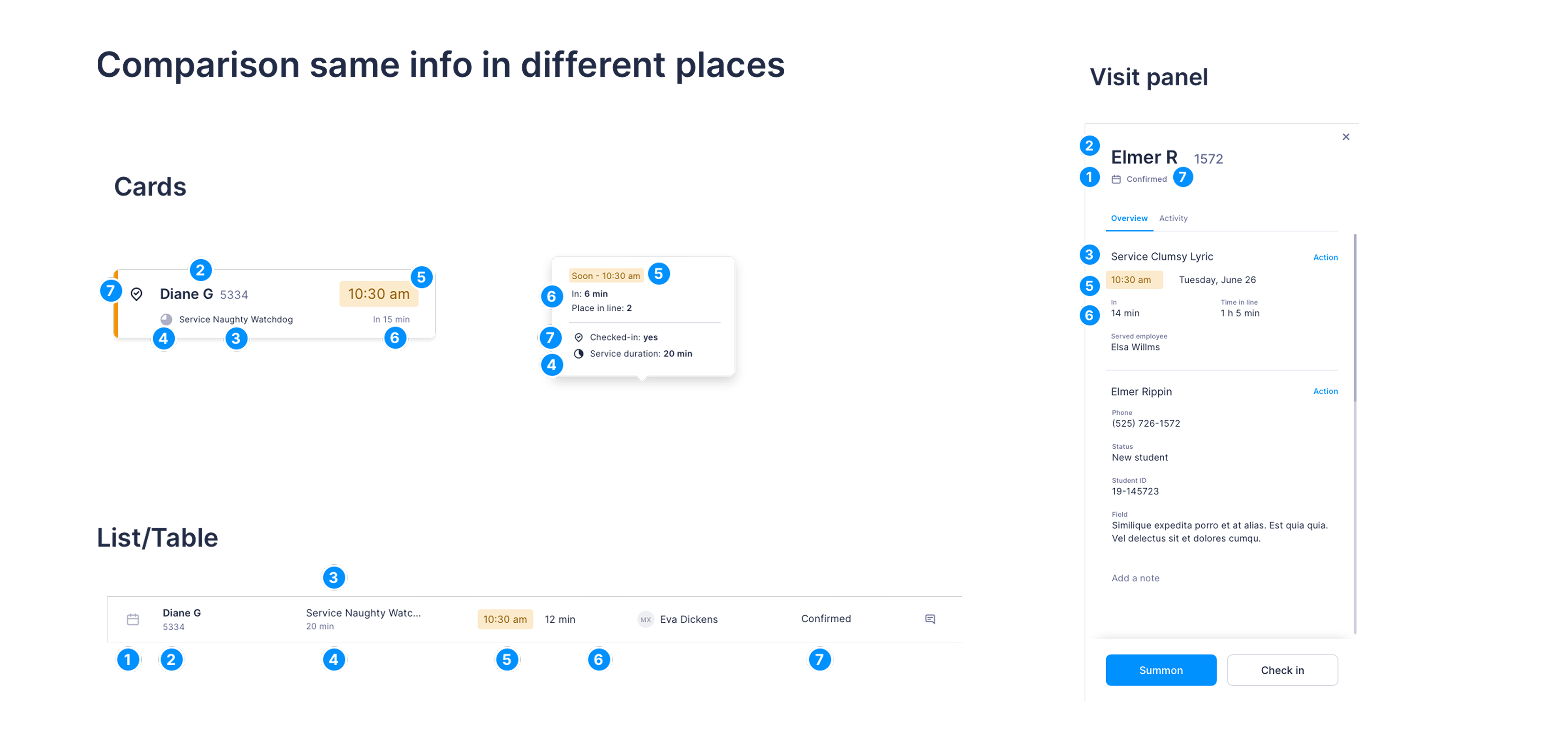
A shared reference for time made different surfaces easier to interpret.
Communicates the visitor’s current urgency.
Uses the same state to establish priority at a glance.
Makes urgency scannable across visitors and lets operators isolate a time state.
Connects the visitor’s state to the next action and appointment context.
In product
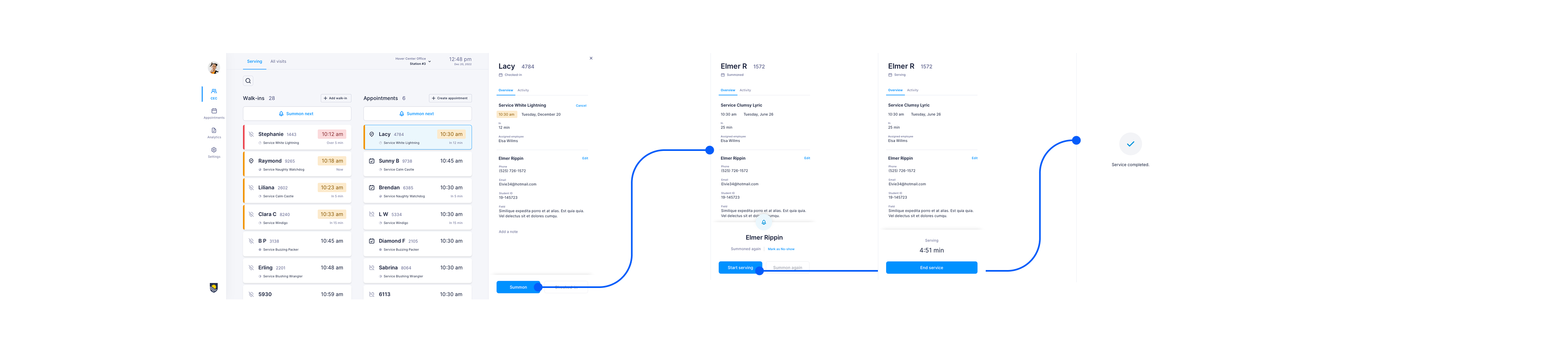
Queue → selected visitor → summoned → active service → end service.
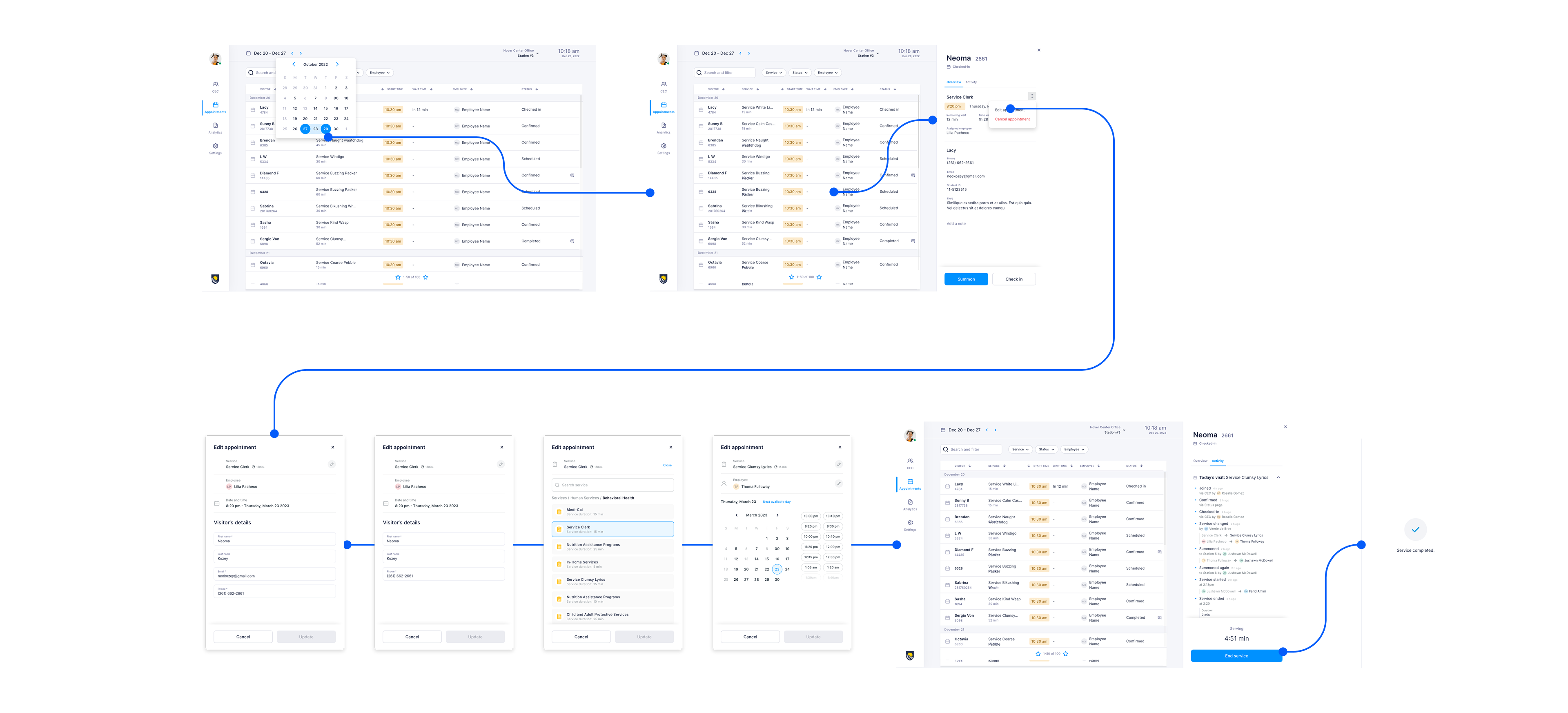
Calendar → filters → visitor panel → edit modal → updated context.
Tablet and mobile kiosk experiences reuse the visual language where the interaction model applies.

Outcome
The impact was structural: decisions became documented, collectively agreed and reusable across product surfaces.
Shared
Designers and developers gained a common language for discussing states, patterns and behavior.
Reusable
New screens could start from predictable patterns rather than recombining generic components from scratch.
Scalable
The system supported contribution from three designers without making decisions dependent on one person.
Learning
Familiar interaction models reduced unnecessary invention. The system became distinctive when it encoded time, urgency and next actions; documentation and shared approval made those decisions durable beyond individual files.